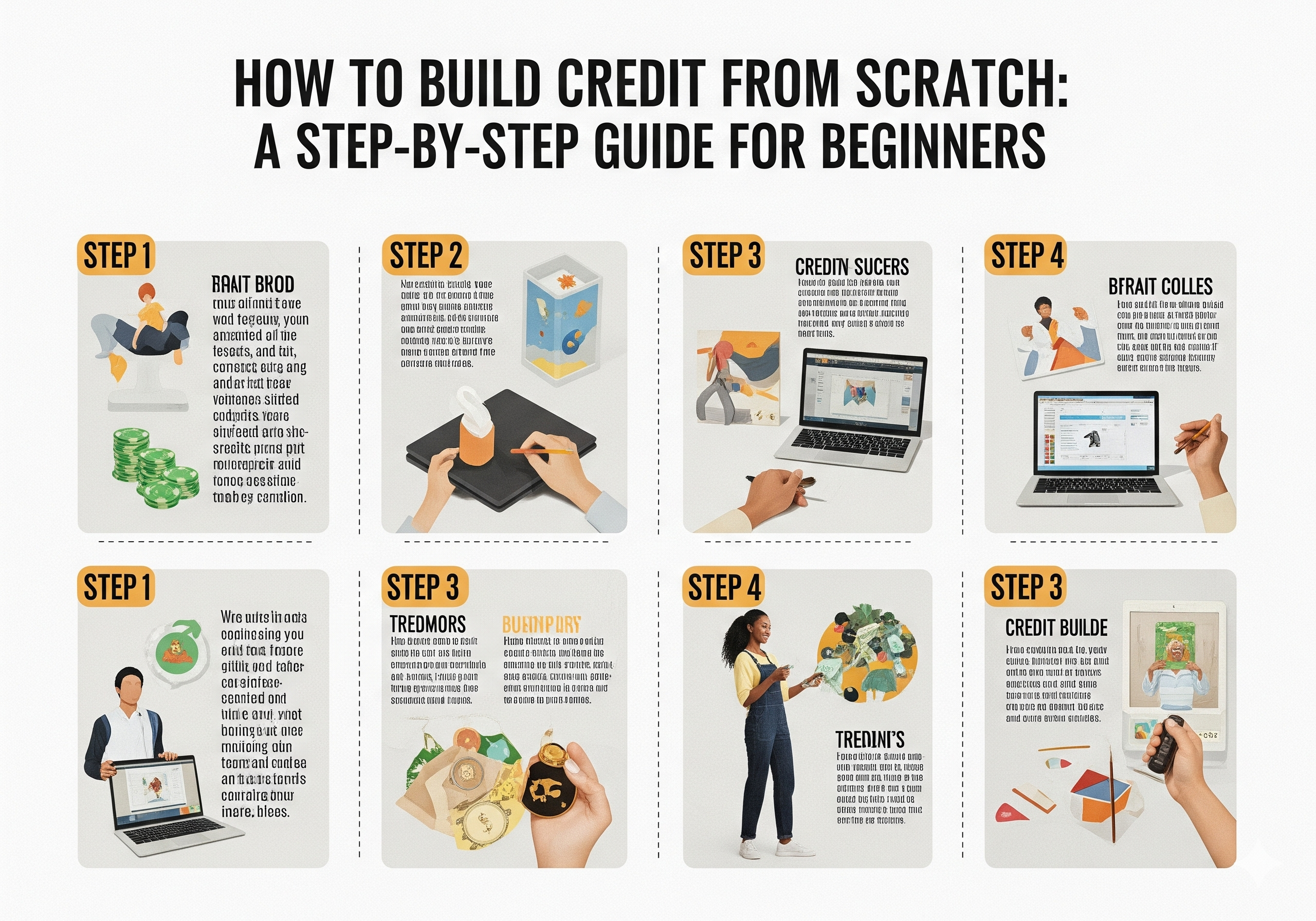
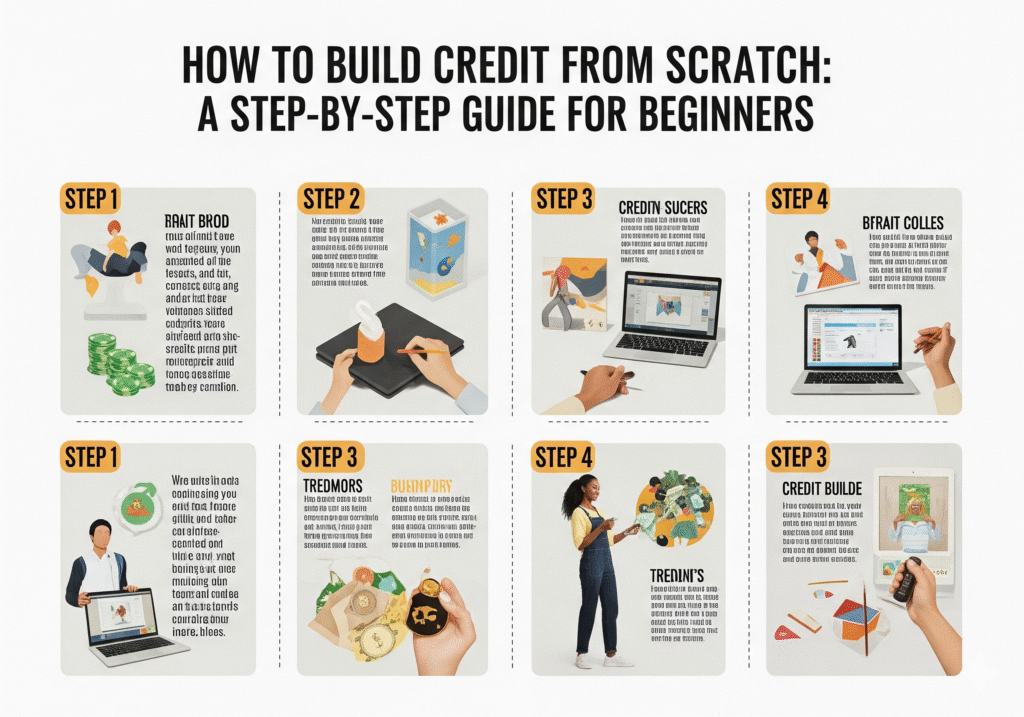
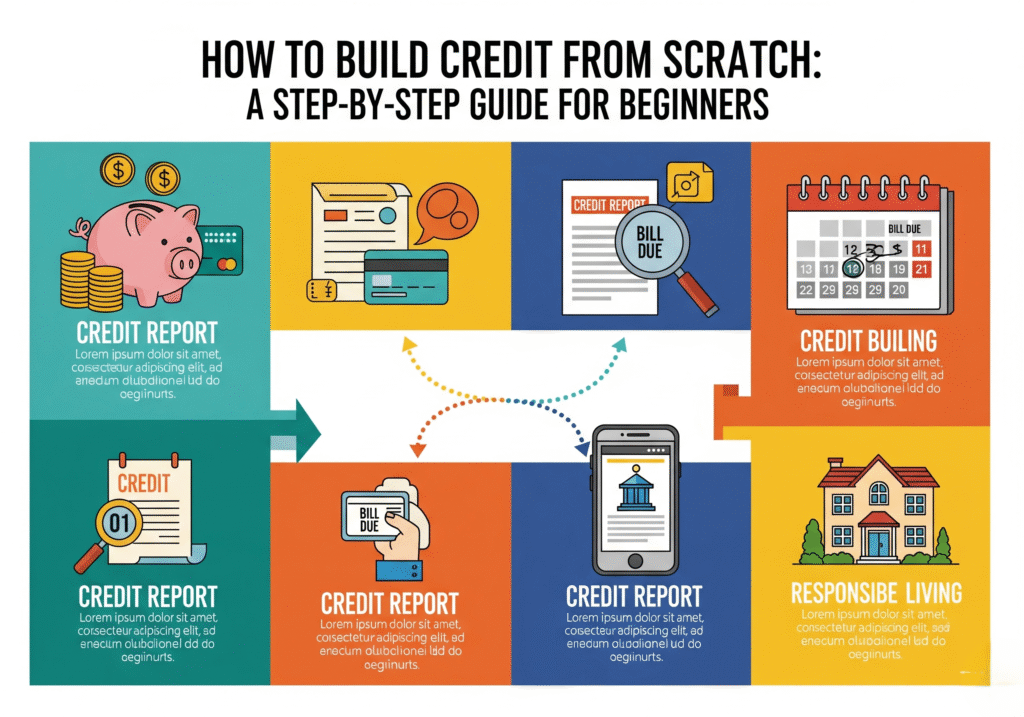
How to Build Credit from Scratch: A Step-by-Step Guide for Beginners
How to Build Credit from Scratch
Introduction OF How to Build Credit from Scratch
In the United States, your credit score is one of the most important numbers in your financial life. It determines whether you can get approved for a credit card, car loan, mortgage, or even rent an apartment. But what if you’re just starting out and have no credit history at all? Don’t worry—everyone begins somewhere. This guide will walk you through practical, beginner-friendly steps on how to build credit from scratch and set a strong foundation for your financial future.
Why Credit Matters
In essence, credit refers to how reliable you appear financially to lenders. A greater credit score indicates:
- Reduced loan interest rates
- Credit card approval is simpler.
- Improved rental prospects
- Increased credit account limits
However, even if you’ve never been careless with money, having no credit history can feel like a barrier. Building credit from scratch is crucial for this reason.
Step 1: Start with a Secured Credit Card
The simplest method to start if you have no credit history is with a secured credit card. In contrast to a standard card, you will need to pay a deposit, typically between $200 and $500, which will serve as your credit limit.
- For little transactions like groceries or gas, use the card.
- Always make on-time, full payments on your balance.
- Responsible utilization will help you establish a good credit history in 6–12 months.
Pro tip: Seek out secured credit cards that send information to Equifax, TransUnion, and Experian, the three main credit bureaus.
Step 2: Consider a Credit Builder Loan
Credit builder loans are available from a few community banks, credit unions, and internet lenders. This is how it operates:
- The lender deposits the loan amount into a savings account rather than giving you cash up front.
- You pay tiny amounts each month, usually between $25 and $50.
- You receive the money and a clean credit record when the loan is paid back in full.
This approach is particularly useful if you wish to use more than just credit cards.
Step 3: Become an Authorized User
Ask to be added as an authorized user on a friend’s or family member’s credit card if they are a reliable person with good credit.
- Even using the card is not required.
- Your credit file will reflect their track record of on-time payments.
- Within a few months, this can raise your credit score.
Step 4: Pay All Bills on Time
A third of your FICO credit score is based on your payment history. There are services like Experian Boost or RentTrack that notify credit bureaus of on-time payments even if a bill (such as rent or utilities) isn’t a credit account.
- Set up each bill to be paid automatically.
- Make sure you pay the minimal amount owed on your credit accounts.
- Don’t allow payments to be past due by more than 30 days.
The secret is consistency.
Step 5: Keep Credit Utilization Low
The percentage of your available credit that you are using is known as credit usage. For instance:
- Your utilization is 50% if you spend $250 and have a $500 credit card limit.
- Use should not exceed 30%, preferably less than 10%.
This demonstrates to lenders that you are not overly reliant on credit.
Step 6: Monitor Your Credit Score and Report
When establishing credit from start, you should frequently assess your progress.
- For score tracking, use free applications like Experian or Credit Karma.
- Every year, you may get your credit report for free at AnnualCreditReport.com.
- Keep an eye out for mistakes; if you find one, contest it right away.
Step 7: Gradually Upgrade to an Unsecured Credit Card
You can frequently switch from a secured to a standard unsecured card after 6–12 months of prudent use. Higher limits and occasionally prizes are available with these cards.
- Select a card that is easy for beginners to use, such as a starting or student card.
- Maintain open previous accounts (the duration of your credit history affects your score as well).
Step 8: Diversify Your Credit Mix AND
How to Build Credit from Scratch
Lenders prefer to see a variety of credit kinds throughout time:
- Credit cards
- Installment loans for personal, student, and auto loans
- Cards for retail stores
You can add these as your funds develop; you don’t need them all at once.
Common Mistakes to Avoid When Building Credit
- Applying for too many cards at once reduces your score briefly because each application generates a hard inquiry.
- Credit card maxing ↑ Excessive balances indicate risk and impair utilization.
- Closing your oldest account can affect your credit score because it shortens your credit history.
- Failure to make a single payment => One late payment might remain on your record for years.
How Long Does It Take to Build Credit from Scratch?
With persistent work:
- A credit score can be established in as little as three to six months.
- The average time to achieve a “good” score (above 670 FICO) is 12 to 18 months.
- Your credit profile gets stronger the longer you continue to practice excellent practices.
Final Thoughts OF How to Build Credit from Scratch
Although learning how to establish credit from scratch might seem overwhelming at first, it is completely feasible to go from having no credit history to having a good credit score in less than a year if you follow the correct plan. Use a credit builder loan or secured credit card to start small, make all of your payments on time, maintain small balances, and track your progress.
Keep in mind that establishing credit is a process rather than a quick fix. Every constructive action you take today positions you for long-term financial success, improved financial possibilities, and reduced interest rates.
compound-interest-explained-how-100-grows-over